
Deck & Fence Care: Is Staining or Painting Better?
A June guide for Reedsburg-area homeowners choosing the most durable outdoor finish for Wisconsin weather
June is when decks and fences start doing real work again. Cookouts, kids, pets, patio furniture, lake weekends, rainstorms, humidity, and direct summer sun all hit your exterior wood hard. If your deck boards are fading or your fence is starting to look gray and dry, you may be wondering whether staining or painting is the smarter choice.
The honest answer: both can work, but they are not equal for every surface.
For most decks in the Reedsburg area, stain is usually the better long-term choice because it penetrates the wood, handles foot traffic better, and is easier to maintain. For fences, the decision depends more on the look you want, the condition of the wood, and how much maintenance you are willing to do.
A professional exterior painting contractor can help you choose the right system before you spend money on a finish that fails too early.
Why decks and fences need different finish strategies
Decks and fences may both be made of wood, but they live very different lives.
A deck takes abuse from above: foot traffic, patio furniture, grills, standing water, snow, and constant UV exposure. A fence deals more with vertical weather exposure: sun, wind, rain, sprinklers, lawn equipment, and moisture near the ground.
That difference matters because paint and stain perform differently depending on the surface.
A deck needs a finish that can handle movement, moisture, and abrasion. A fence needs a finish that protects against weathering while maintaining curb appeal.
If you are already planning other outdoor updates, this is a good time to talk with Nordic Painting about your broader exterior painting services so the deck, fence, trim, siding, and outdoor features all work together visually.
Staining: the best option for most decks
Stain is often the better choice for deck surfaces because it soaks into the wood instead of sitting heavily on top of it. That makes it more forgiving when boards expand, contract, and take foot traffic.
Benefits of staining a deck
Stain is a strong choice because it:
- Penetrates the wood instead of forming a thick surface film
- Handles foot traffic better than paint in many cases
- Is easier to refresh when it starts fading
- Shows more natural wood grain
- Is less likely to peel in sheets when properly applied
- Helps protect against UV damage and moisture absorption
For Reedsburg-area homes, stain is especially practical because Wisconsin weather is hard on horizontal wood surfaces. Snow sits on decks. Rain pools in low spots. Summer sun bakes exposed boards. A penetrating stain usually handles that cycle better than a paint film.
Painting: when it makes sense outdoors
Paint creates a more solid, opaque finish. It gives strong color coverage and can hide older wood better than stain. However, on decks, paint can become a maintenance headache if moisture gets underneath it.
Benefits of painting
Paint may be the better choice when:
- You want a bold, solid color
- The wood is older and uneven in appearance
- You want to match the home’s trim or siding
- The surface is vertical, like a fence or railing
- You are working with properly prepared wood that can hold paint well
Paint can look sharp on fences, railings, posts, and vertical outdoor features. It can also help create a cleaner, more finished look when paired with fresh siding, trim, or other exterior painting updates.
The downside is simple: if paint fails, it usually fails more visibly than stain. Peeling paint on a deck is not subtle.
Decks: stain usually wins
For most wood decks, stain is the smarter choice.
Deck boards are horizontal, which means they collect water, snow, dirt, leaves, and foot traffic. Paint creates a surface film, and once that film cracks, water can get underneath. From there, peeling and flaking often follow.
Stain is more forgiving. It wears gradually instead of peeling dramatically. That makes future maintenance easier and often less expensive.
Best finish for decks
For decks, consider:
- Semi-transparent stain if the wood is in good shape and you want natural grain
- Semi-solid stain if you want more color coverage but still some texture
- Solid stain if the wood is older and needs a more uniform look
Solid stain can be a strong middle ground. It gives more coverage than transparent stain but is often easier to maintain than paint on deck boards.
If your deck is already peeling from old paint, it may need significant prep before any new finish is applied. That is where working with a Reedsburg, WI painting company can save you from repeating the same failure.
Fences: stain or paint can work
Fences are different. Because they are vertical, they shed water better than deck boards. That means paint can perform well on a fence if the surface is prepped correctly.
Choose stain for a fence if you want:
- A natural wood look
- Easier future maintenance
- Less visible peeling
- A rustic or warm appearance
- Better flexibility as the wood ages
Choose paint for a fence if you want:
- A crisp, clean appearance
- A specific color that matches the home
- Better coverage over mismatched boards
- A more finished, architectural look
- Strong curb appeal from the street
For privacy fences, stain often makes sense because there is a lot of surface area and maintenance matters. For decorative fences, painted finishes can look excellent when tied into the home’s trim, shutters, or exterior color palette.
What about railings, posts, and pergolas?
Outdoor structures often need a mixed approach.
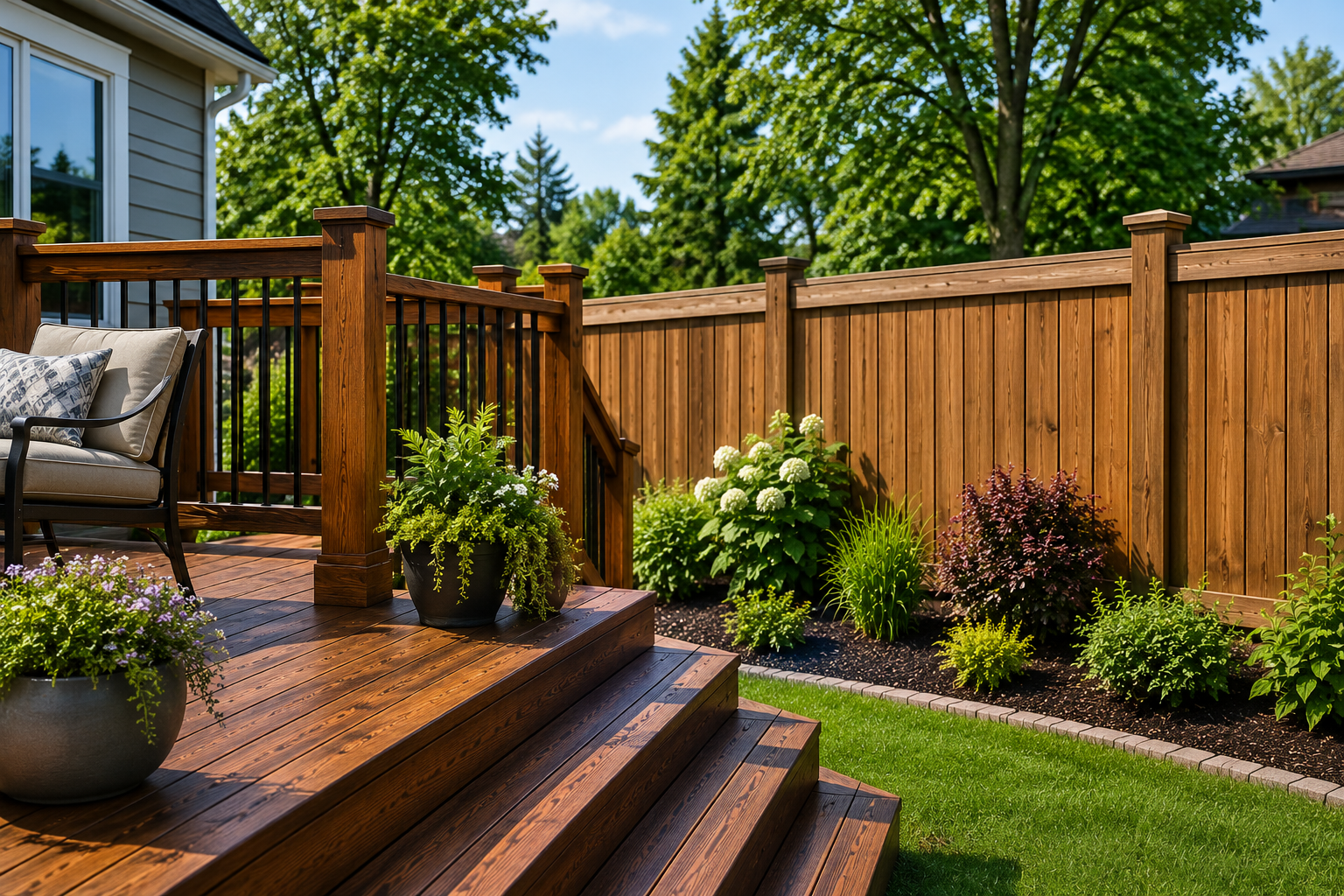
Deck boards may perform best with stain, while railings, posts, lattice, or pergolas may look better with a more solid finish. The key is making the finishes feel intentional, not mismatched.
For example:
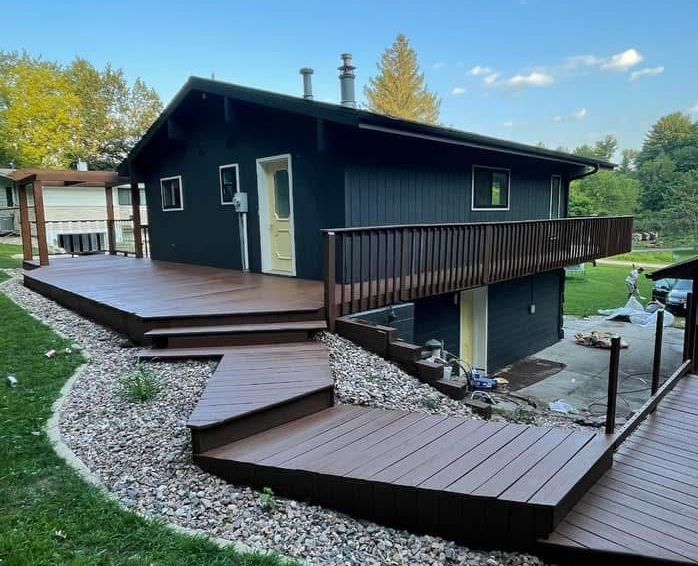
- Stained deck boards with painted railings
- Solid-stained fence panels with painted posts
- Natural wood pergola stain with painted exterior trim nearby
- Coordinated deck stain that complements the home’s siding color
A good exterior painting contractor will help you avoid clashing tones, wrong sheens, and products that do not belong together.
Prep matters more than the product label
Whether you stain or paint, prep is what determines how long the finish lasts.
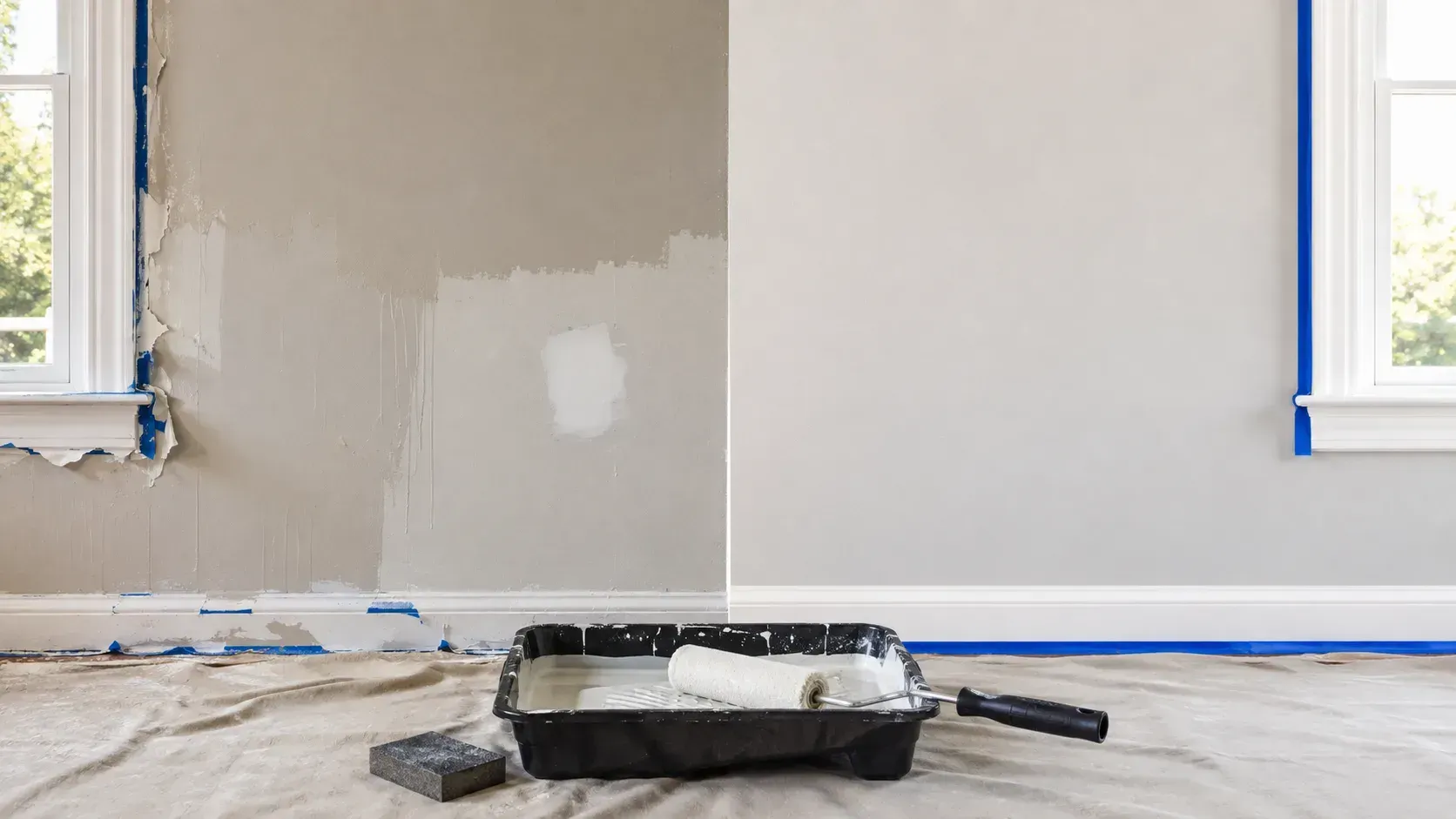
Outdoor wood needs to be clean, dry, and ready to accept the coating. If you apply stain over dirt, mildew, old failed finish, or damp boards, it will not perform the way it should.
Proper deck and fence prep usually includes:
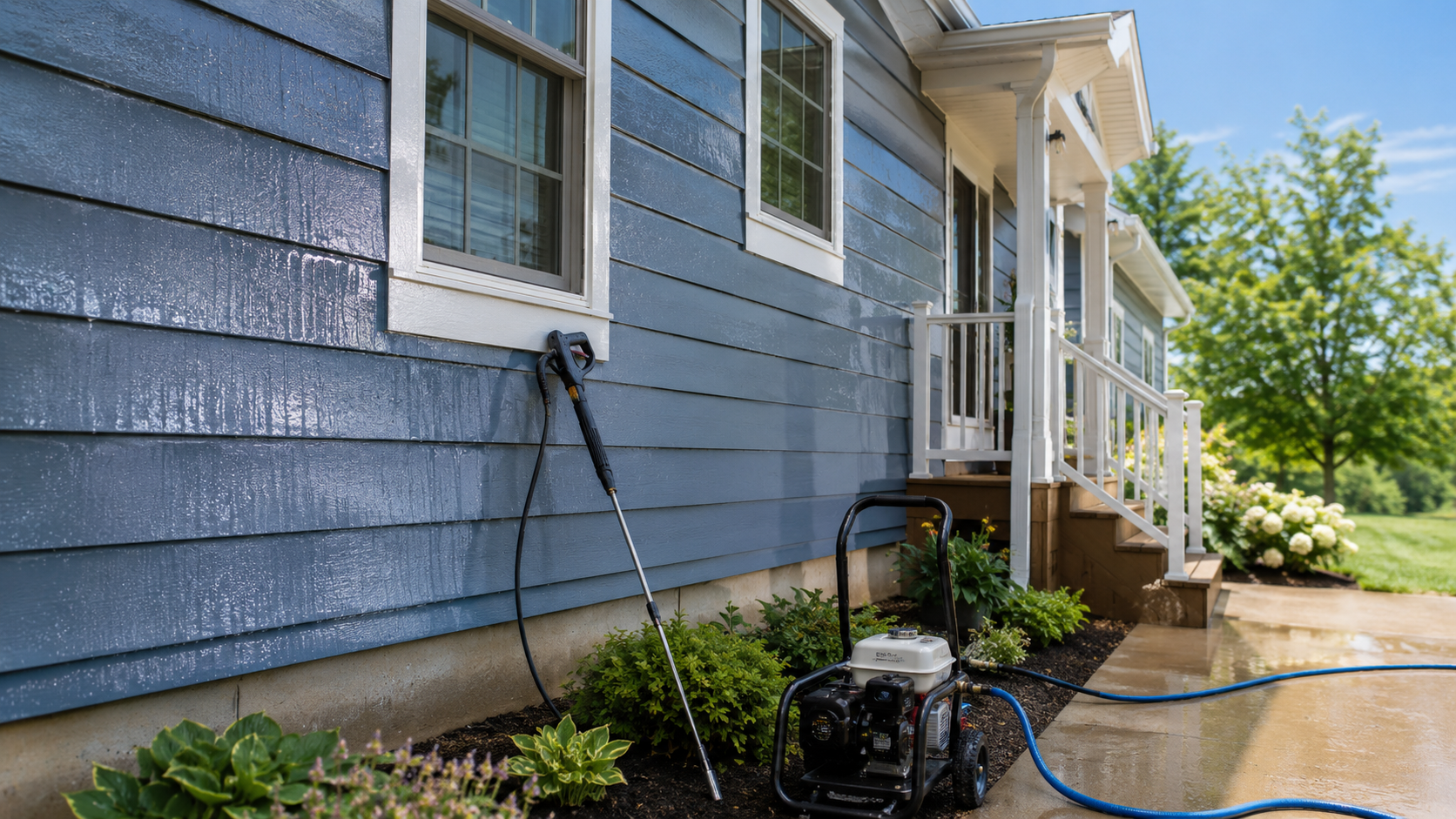
- Cleaning off dirt, pollen, algae, and mildew
- Removing loose or peeling old finish
- Sanding rough areas and raised grain
- Replacing rotted or damaged boards
- Checking fasteners and popped nails
- Allowing the wood to dry properly before coating
- Choosing the correct primer when painting bare wood
This is where many DIY jobs go wrong. The finish may look good for a few weeks, then fail because the surface was never truly ready.
Wisconsin weather makes product choice more important
In Reedsburg and the surrounding area, outdoor wood has to survive:
- Spring rain
- Summer humidity
- Direct UV exposure
- Fall temperature swings
- Snow and ice
- Freeze-thaw cycles
- Moisture trapped near shaded areas
That means cheap coatings are not a bargain. A low-grade stain or paint may save money upfront, but it often fades, peels, or washes out sooner.
A better system usually includes a higher-quality coating, proper dry time, correct application temperature, and realistic maintenance planning.
If your deck or fence is part of a larger home exterior refresh, Nordic’s exterior painting services can help you choose products that hold up better in local conditions.
How often should decks and fences be refinished?
There is no perfect timeline because sun exposure, wood type, traffic, and product choice all matter. But here is a practical guideline.
Decks
Most stained decks need attention every 2 to 4 years, depending on exposure and traffic. Heavily used or full-sun decks may need maintenance sooner.
Fences
Fences usually last longer between refinishing because they are vertical. A stained fence may need attention every 3 to 5 years, while a painted fence may last longer if the prep and product are strong.
High-exposure areas
South- and west-facing surfaces wear faster. Shaded areas may grow mildew sooner. Areas near sprinklers, landscaping, or poor drainage can break down early.
The smartest approach is to inspect every spring and plan touch-ups before failure spreads.
Warning signs your deck or fence needs attention
Do not wait until the wood looks terrible. Refinish sooner if you notice:
- Gray, dry, weathered wood
- Water soaking in instead of beading
- Peeling or flaking paint
- Mildew or green staining
- Splintering boards
- Faded color
- Cracked or cupped deck boards
- Soft or rotting sections
- Fence boards warping or loosening
Once wood starts absorbing moisture aggressively, finish failure speeds up. Early maintenance is cheaper than major restoration.
So, is staining or painting better?
For most decks: staining is usually better.
For fences:
either can work, depending on the look and condition of the wood.
Here is the simple rule:
- Choose stain when you want easier maintenance, natural wood character, and better performance on horizontal surfaces.
- Choose paint when you want solid color coverage, a crisp finished look, and the surface is vertical or protected enough to hold paint well.
For many homes, the best answer is not one or the other. It is a planned combination of stain and paint that protects the wood while improving the overall exterior appearance.
Work with Nordic Painting for durable outdoor finishes
Decks and fences are too exposed for guesswork. The right finish depends on the age of the wood, current coating, sun exposure, moisture, and how you want the finished space to look.
Nordic Painting helps homeowners in the Reedsburg area choose durable outdoor finishes that make sense for Wisconsin weather—not just for the first weekend after the job is done, but for the seasons ahead.
A properly finished deck or fence should protect your investment, improve curb appeal, and make your outdoor space feel ready for summer.