
Lakefront Living: Choosing the Right Exterior Paint for Maximum Longevity
A May guide for Reedsburg-area lake homes—built to handle sun glare, humidity, wind, and seasonal freeze-thaw
Lakefront living is the best—until your exterior paint starts peeling, fading, or growing mildew faster than it should. In May, homeowners around Reedsburg, WI and nearby lake areas start seeing what winter and early spring moisture really did: soft trim, popped caulk lines, chalky siding, and sun-baked elevations that look tired long before their time.
If your home sits near water (or even in a consistently humid microclimate), you can’t treat your repaint like a normal neighborhood job. You need the right exterior coating system, the right prep, and smart decisions that match lakefront conditions.
Why lakefront exteriors fail faster (and what May reveals)
Lake conditions accelerate exterior paint breakdown because of four constant stressors:
- Higher humidity: Surfaces stay damp longer, especially on shaded sides.
- UV overload + sun glare: Water reflects sunlight and increases UV punishment, leading to faster fading and binder breakdown.
- Wind-driven rain: Water gets pushed into joints, trim edges, and tiny cracks.
- Freeze-thaw movement: Wisconsin’s seasonal expansion and contraction splits caulk and stresses paint films.
This is why “it was painted a few years ago” doesn’t always mean it was painted correctly for the location.
Start with the surface: paint choice depends on what you’re painting
Before picking a product, identify the substrate. The best system for wood isn’t always the best system for fiber cement or engineered wood.
Common lakefront exteriors include:
- Wood siding and wood trim (most sensitive to moisture and movement)
- Fiber cement (durable, but needs correct priming and topcoat)
- Engineered wood (often fails at edges and seams if water gets in)
- Vinyl (paintable with the right products and color limits)
- Masonry/stucco (needs breathable coatings to manage moisture vapor)
If you’re unsure, this is where a professional exterior painting consultation saves you money—wrong assumptions lead to early failure.
The longevity rule: it’s not “paint,” it’s a system
For lakefront homes, product selection should be framed as a system:
Premium 100% acrylic exterior paint (the lakefront baseline)
For most lakefront conditions, premium 100% acrylic coatings are the safest bet because they:
- Flex with seasonal movement
- Bond better after proper prep
- Resist peeling and cracking longer
- Hold color better under UV exposure
- Clean up well and resist chalking
Elastomeric coatings (good for specific situations—not everything)
Elastomeric coatings can bridge small cracks and handle movement, but they’re not automatically “better.” They are best for:
- Certain masonry or stucco surfaces with fine cracking
- Properly dried, stable substrates
- Situations where moisture management is already addressed
Used incorrectly, thick coatings can create moisture problems where you don’t want them.
Breathability matters near water
A common mistake is sealing everything up without considering moisture vapor movement. Lakefront homes need coatings that shed bulk water but still behave properly with seasonal moisture cycles.
If your home fights moisture regularly, the content in Nordic’s paint and moisture education piece supports the same principles you’ll deal with outside—humidity control, surfaces drying correctly, and preventing recurring issues.
Color and sheen choices that last longer by the lake
This isn’t just about style. Your color and finish choices affect lifespan.
Dark colors: more heat, more movement, more stress
On sun-heavy elevations, dark colors absorb heat and increase thermal movement. That can:
- Stress caulk lines
- Accelerate fading
- Promote wood checking
- Shorten the life of marginal paint systems
Light-to-mid tones are a durability advantage
They’re more forgiving in direct sun and typically hold up longer in harsh exposure.
Exterior sheen: don’t default to flat
Flat finishes can look great—but in humid lake conditions they can hold dirt and organic staining. For many lakefront homes, a low-luster finish is a smarter balance of appearance and cleanability.
Prep is the difference between “looks good” and “lasts”
If your painter is talking mostly about the brand of paint and not prep, you’re buying a short-lived paint job.
Lakefront exteriors demand:
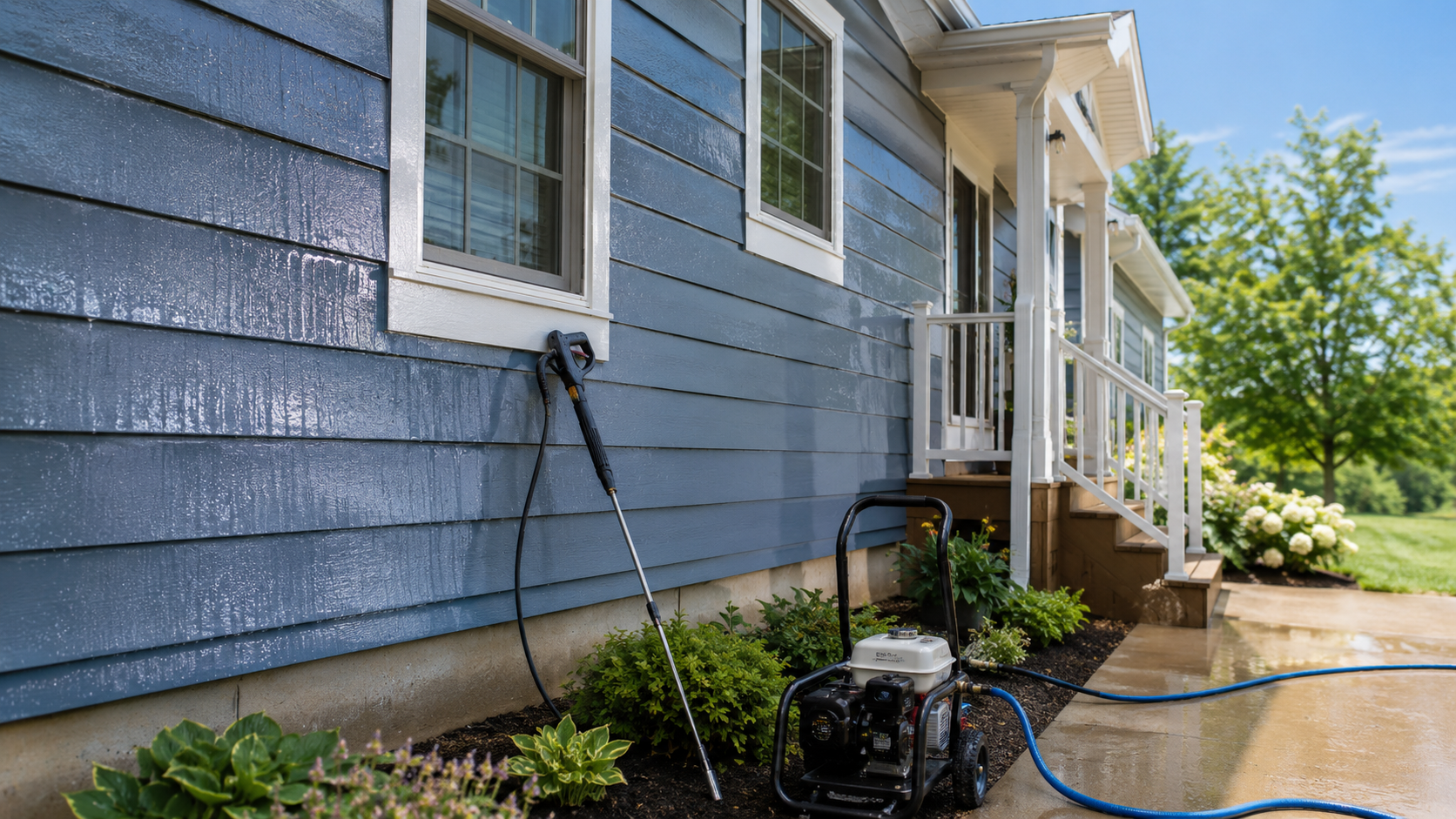
Thorough washing (not a quick rinse)
You need to remove pollen, grime, and organic growth so the coating bonds correctly.
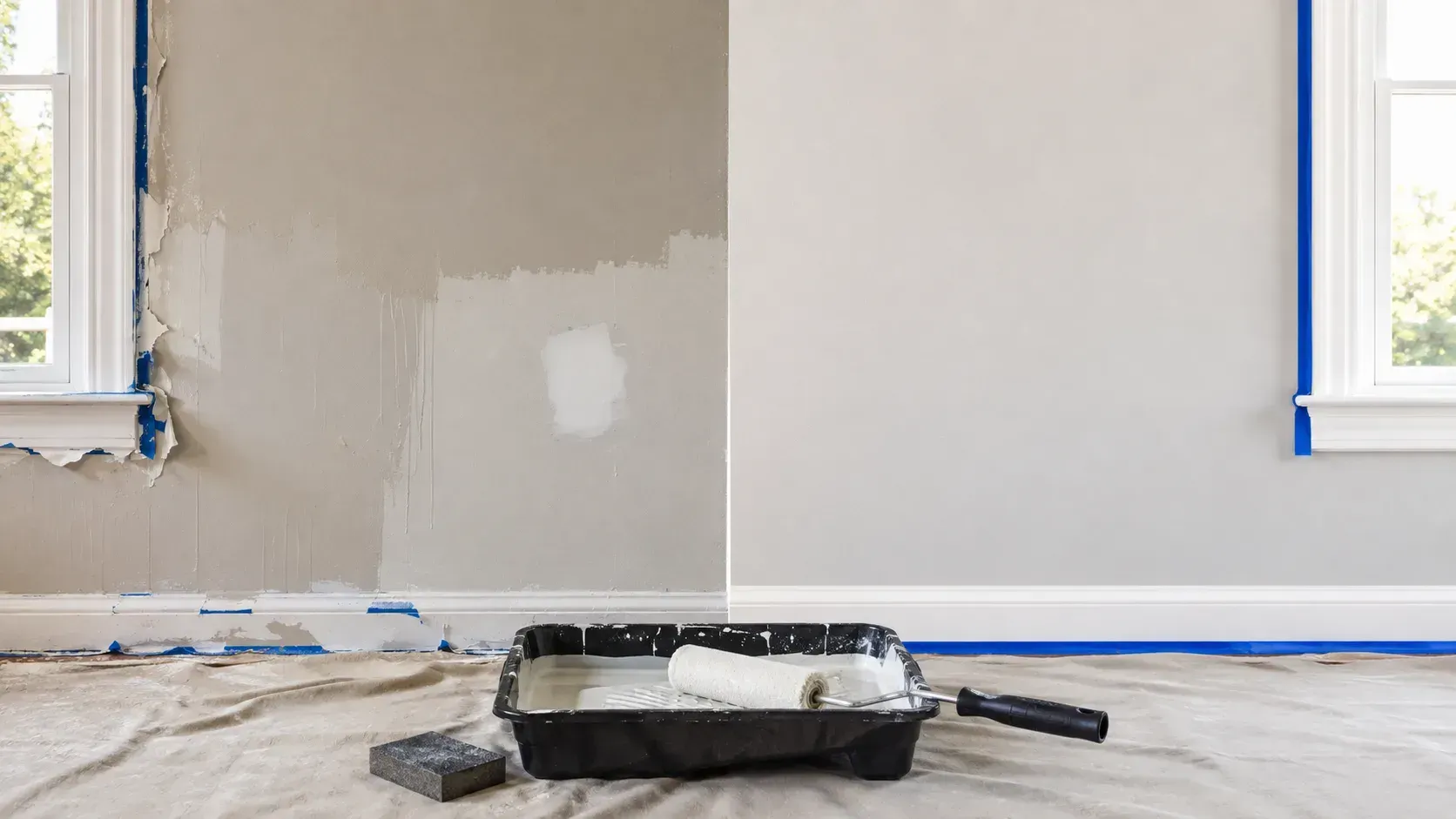
Full scraping + feather sanding
Loose edges must be stabilized and smoothed. Painting over flaky transitions is the fastest path to peeling again.
Correct primer where it matters
Bare wood, tannin bleed, knots, and water stains need targeted primer strategy. Skipping primer is how “new paint” fails fast.
High-performance exterior caulk (applied correctly)
Lake homes move. Cheap caulk splits. Failed caulk lets water behind paint—then paint fails.
Fix water entry points first
Paint isn’t waterproofing. If splashback, gutters, flashing, or drip edges are wrong, repainting becomes a cosmetic reset, not a longevity upgrade.
This is exactly why working with an experienced exterior painting contractor matters more on lakefront property than almost anywhere else.
Lakefront “hot zones” that fail first
Plan extra prep and stronger materials for these areas:
- South and west elevations (highest UV and heat load)
- Shaded north sides (slow drying = mildew risk)
- Bottom edges of siding (splashback and snow pile moisture)
- Window and door trim (end grain and joints absorb water)
- Deck-adjacent walls (trapped humidity and poor airflow)
- Soffits and eaves (condensation and wind-driven moisture)
If you keep seeing peeling in the same places, it’s almost never “bad paint.” It’s typically prep, moisture source, or the wrong system for the surface.
Why May is the smart month to plan your lakefront repaint
May is ideal because you can:
- Catch winter damage before it spreads
- Schedule before peak summer calendars fill up
- Work during stable temps for better curing and adhesion
- Avoid late-season dew issues that show up in fall
If you want the longest-lasting outcome, May is when you plan and book—not when you “hope to squeeze it in.”
What to ask before hiring a painter for a lakefront exterior
Ask these questions directly:
- What’s your process for removing mildew and organic staining?
- How do you handle bare wood and stain-blocking needs?
- What exterior caulk do you use—and where do you avoid caulking?
- What coating system do you recommend for my siding type, and why?
- How do you address moisture sources like splashback, gutters, and airflow?
- What areas will require the most prep—and what exactly does that include?
If the answers are vague, the paint job won’t last.
Nordic Painting: lakefront-ready exterior painting for the Reedsburg area
Lakefront exteriors don’t need a “fresh coat.” They need a durability-first plan built around moisture, UV, and movement.